

For thousands of young immigrants, graduating from high school in the United States has not only been a dream, but also the promise of a better future. However, that goal now faces one of its greatest obstacles.
For example, in Florida, the State Board of Education approved a rule prohibiting the enrollment of undocumented students in the 28 institutions of the College System and extended that restriction to adult education programs, including GED preparation and English language courses. The measure makes Florida one of the most restrictive states in the country regarding access to higher education for immigrants.
But the impact goes far beyond an administrative decision in one state. The Florida case also raises a deeper question: what happens to undocumented immigrant youth after they finish high school in the United States? Although thousands earn their high school diplomas each year, only a fraction can advance to the next stage: college.
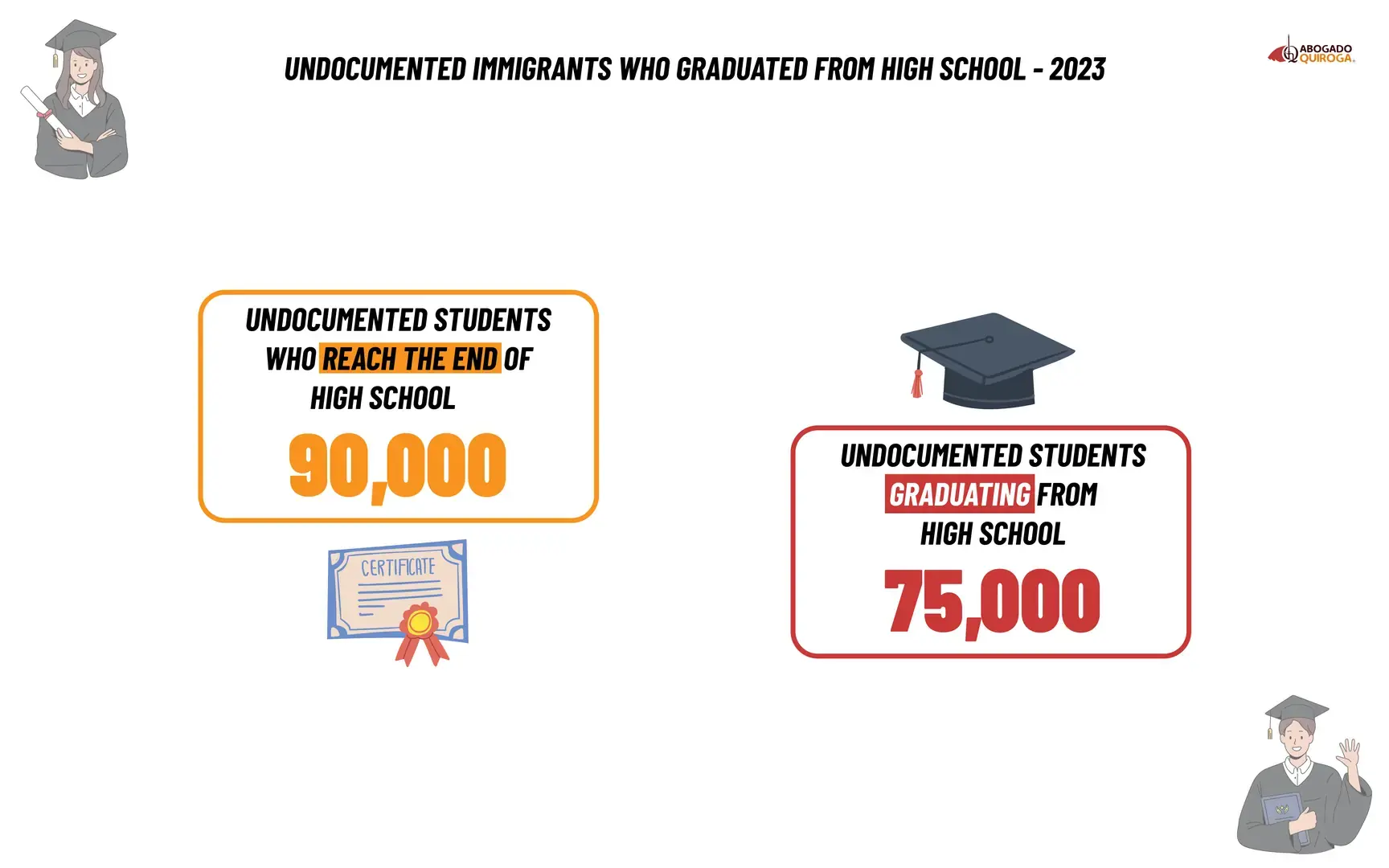
The latest figures show the scale of what is happening. A recently published study by the Migration Policy Institute estimates that around 90,000 undocumented youth reach the final year of high school in the United States each year; however, about 75,000 graduate.
This is a consequence of stricter immigration policies, the elimination of benefits such as in-state tuition, and the lack of access to financial aid, all of which increasingly reduce these students’ chances of continuing their university education.
This new reality threatens to transform the U.S. education system and the future of a generation that grew up in the country, but now faces many closed doors that education had promised to open.
Why is it becoming harder for undocumented students to reach college in the United States?
According to the Migration Policy Institute’s study “A Generation Threatened”, prepared for the Presidents’ Alliance on Higher Education and Immigration, the obstacles facing undocumented immigrant students do not begin when they apply to college.
Throughout their schooling, they face challenges related to social and economic integration, the emotional impact of immigration uncertainty, and limited opportunities to access higher education. Experts warn that the situation has worsened in recent months due to stricter state and federal policies.
One of the changes that most concerns education organizations is the elimination of benefits that, for years, helped expand access to higher education. In the last year, Florida, Texas and Oklahoma eliminated access to in-state tuition for undocumented students, while other states face pressure to modify similar policies amid the immigration agenda promoted by the Trump administration.
Research also shows that state programs supporting immigrant students have been key to expanding access to higher education. Measures such as in-state tuition, state-funded scholarships and institutional support have allowed thousands of young people who grew up and studied in the United States to continue their academic training despite their immigration status.
But the current landscape is increasingly uncertain. Undocumented students not only face greater economic and legal barriers to accessing college, but also the risk of losing support programs that helped them remain in classrooms for years.
How many undocumented students graduate from high school each year in the United States?
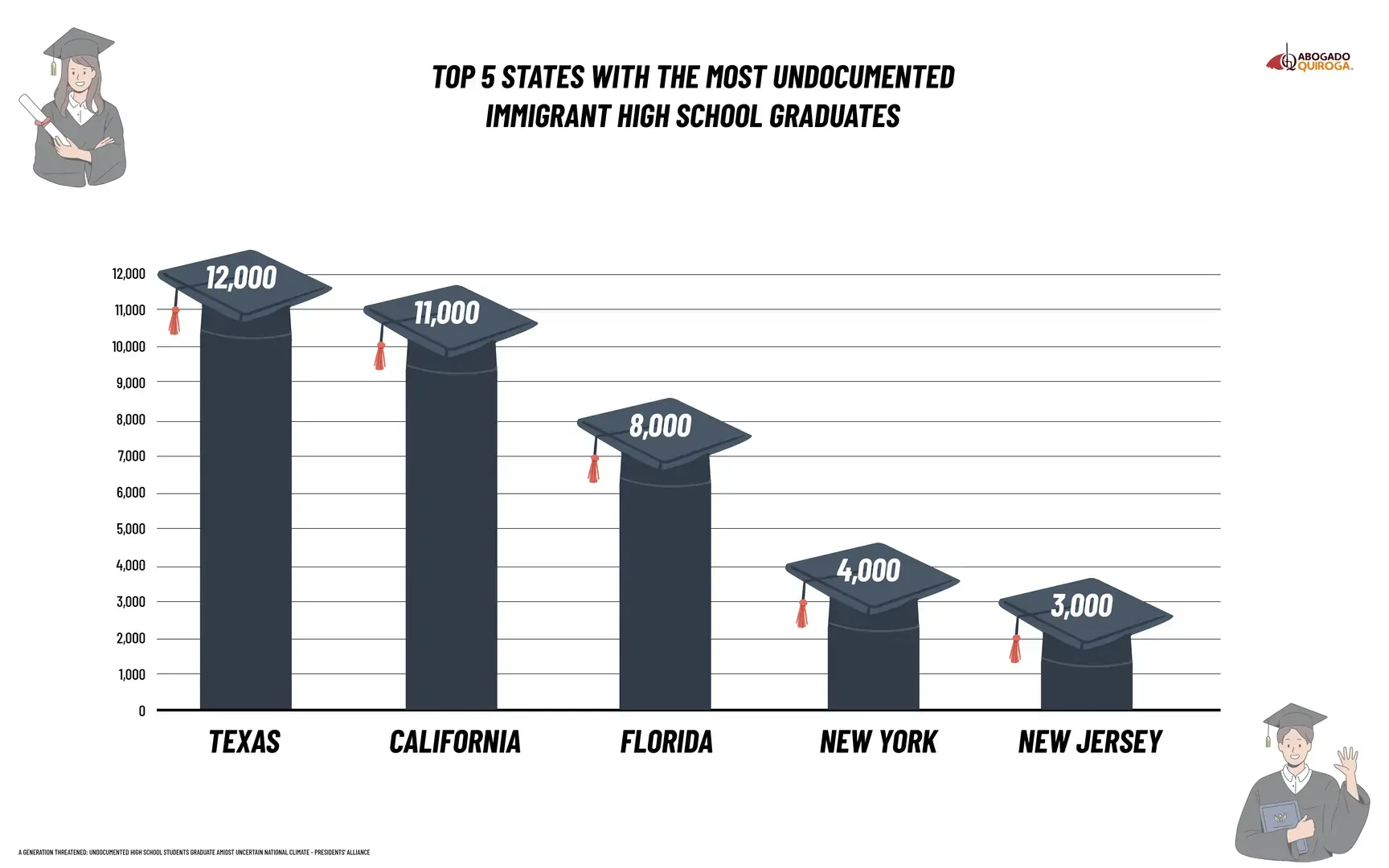
According to the Migration Policy Institute’s study “A Generation Threatened,” approximately half of undocumented high school graduates are concentrated in four states: Texas (12,000), California (11,000), Florida (8,000) and New York (4,000). States such as New Jersey, Maryland, Massachusetts, Virginia, Georgia and Illinois each have at least 3,000 undocumented students graduating every year.
Where do undocumented students in the United States come from?
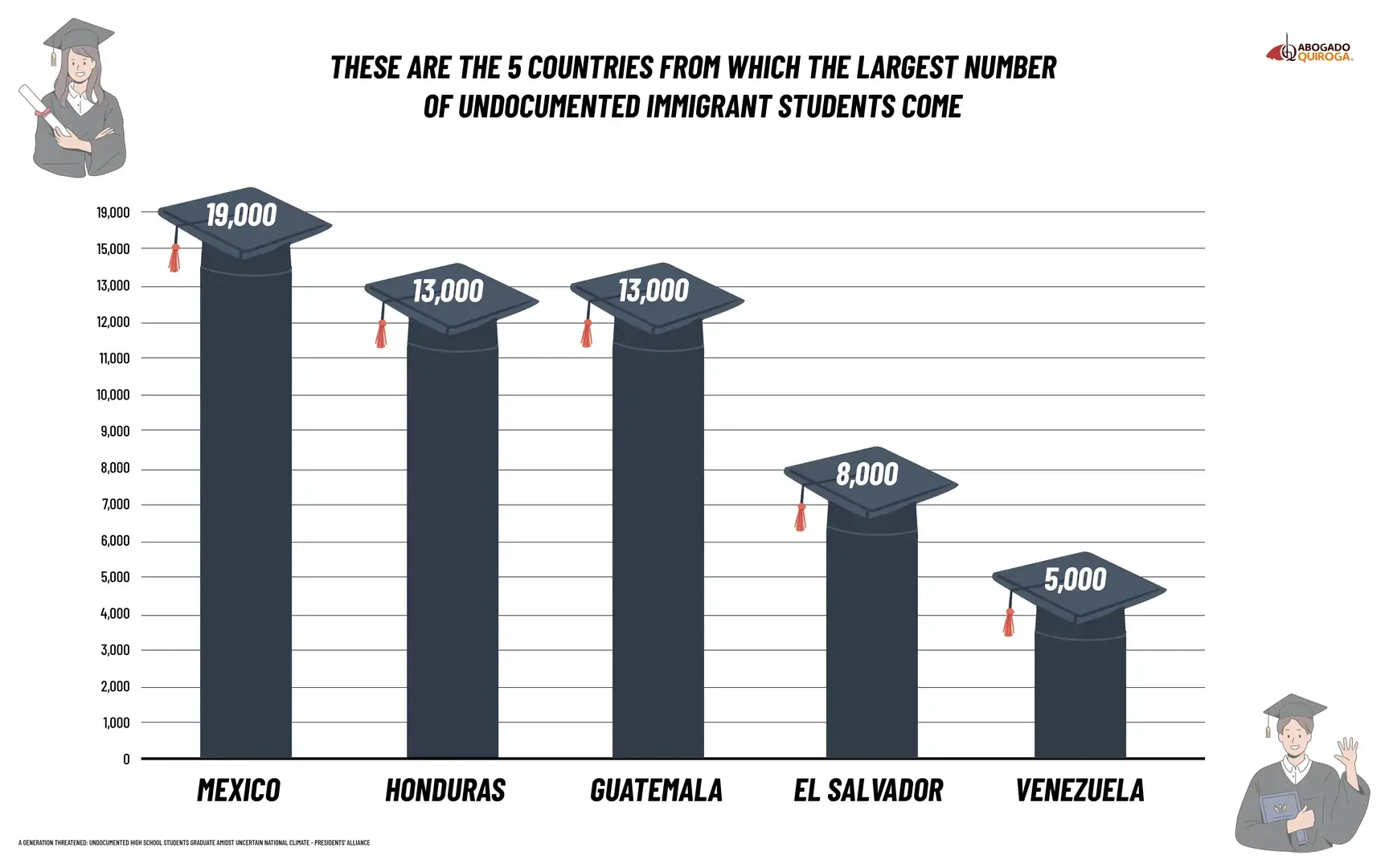
Undocumented high school students in the United States come primarily from Latin America. The countries with the largest numbers are Mexico, Honduras, Guatemala, El Salvador, Venezuela, Colombia, the Dominican Republic, the Philippines, Brazil and Haiti.
Sixty percent are from Honduras, Guatemala, El Salvador, Nicaragua and Mexico. Mexico alone represents approximately 21% of the total, or about 19,000 students. South American and Caribbean countries such as Venezuela, Colombia, Brazil, Ecuador, the Dominican Republic and Haiti contribute an additional 17%, while Asian countries such as the Philippines, India and China make up around 5%.
According to the Migration Policy Institute, of the 90,000 undocumented immigrant students who reach the end of high school each year, 70,000 are Latino (78%), while 8,000 are Black, 7,000 are Asian and Pacific Islander, and 4,000 are white.
The estimated graduation rates are 82.8% for Latino students and 81% for Black students. The difference reflects two separate points in the education path: first, students who reach the final year of high school; and second, those who actually graduate.
The MPI estimates that 70,000 undocumented Latino students reach the final year of high school each year, but with an 82.8% graduation rate, approximately 58,000 earn a high school diploma. Among Black students, 8,000 reach the final year and the graduation rate is 81%, equivalent to 6,480 graduates.
Among the 75,000 undocumented students who graduate annually from U.S. high schools, Latinos represent more than three-quarters (58,000), Asian and Pacific Islander students account for 7,000, while Black and white students account for 6,000 and 4,000 respectively.
These differences show how immigration to the United States continues to evolve over time. In the last two decades, undocumented students have come not only from Mexico and Central America, but also from South America, the Caribbean and Asia.
How does the education system work in the United States?
Unlike many Latin American countries, where education is regulated by the national government, the United States operates under a decentralized model. The Constitution does not assign education to the federal government, so most decisions are made by states and, in many cases, by school districts and educational institutions themselves.
This means that a student can graduate from high school with excellent grades and still face different barriers depending on the state where they live. While some state governments facilitate access to college for young immigrants, others impose economic restrictions or even prohibit their enrollment in public institutions.
The academic path begins with elementary school, which generally runs from kindergarten through fifth grade. It is followed by middle school, typically sixth through eighth grade, which prepares students for the final stage of compulsory education.
High school includes grades nine through twelve. Upon completion, students receive a high school diploma, the main academic requirement for pursuing higher education. It is precisely at this point, when many young people prepare to take the next step toward college, that thousands of undocumented immigrant students encounter the greatest barriers.
What options do undocumented students have after high school?
After finishing high school, students may choose different paths to continue their education.
Community colleges
One of the most common alternatives is community colleges, two-year public institutions that offer technical and academic programs at lower costs than traditional universities.
At these institutions, students can earn an associate degree and later seek admission to a four-year university to complete a bachelor’s degree. For millions of Americans, this model represents a more affordable path to earning a college degree and reducing the cost of higher education. However, for many young undocumented immigrants, even this door can close because of restrictions imposed by some states.
Public universities
Another option is public universities, which are funded primarily with state resources and administered by state governments. These institutions are part of public systems and apply different tuition rates depending on a student’s place of residence.
In most states, there are two tuition categories. The first is in-state tuition, a reduced rate for students who meet residency requirements established by state law. The second is out-of-state tuition, a much higher rate.
That cost difference can amount to thousands of dollars per year and, for immigrant students, it is one of the main reasons they may not be able to enroll in college.
Private universities
Private universities operate under a different model. Because they do not depend financially on state governments, they have greater autonomy to define their admissions and financial aid policies. Institutions such as Harvard, Stanford and Yale can admit students regardless of immigration status, although the high cost of tuition continues to make access a challenge for most immigrant families.
Who decides the rules for undocumented students at public universities?
In many cases, responsibilities are divided between the federal government and the states. While Washington administers financial aid programs such as Pell Grants, federal student loans and aid managed through FAFSA, states have broad authority to establish some of the access requirements for their public institutions.
Each state can decide who is entitled to pay in-state tuition and whether it offers its own financial aid programs, whether undocumented students may enroll in public universities and what documents they must present to prove their immigration situation.
This means that a student with the same academic record may find completely different opportunities depending on the state where they live.
That autonomy explains why, while some states have expanded access to higher education for young immigrants, others, such as Florida, are moving in the opposite direction with measures that restrict or prohibit their entry into public institutions.
Which states allow in-state tuition for undocumented students?
Between 2001 and January 2025, at least 25 states and the District of Columbia promoted tuition equity policies. These measures allowed thousands of undocumented students who met the criteria to pay the same rates as their peers and pursue higher education.
During that period, 19 of those states and the District of Columbia also provided access to state financial aid.
What is happening with in-state tuition under the Trump administration?
Since the beginning of Donald Trump’s new administration, many tuition equity policies have been at risk. In early 2025, Florida repealed its tuition equity policy through the legislature.
Since then, the government has filed several lawsuits against tuition equity policies in states such as Minnesota, Kentucky, Illinois, California and Virginia.
The administration succeeded in ending these policies in Texas and Oklahoma, while Kentucky remains in process. Currently, 22 states and the District of Columbia still maintain these benefits.
How many undocumented students are currently enrolled in U.S. colleges and universities?
According to the Higher Education Immigration Portal, at least 510,000 undocumented students are enrolled in U.S. colleges and universities, representing approximately 2.4% of the total higher education student population.
Of these students, 144,150, or 27.7%, are DACA recipients or eligible for DACA.
Although some can qualify for DACA, most undocumented students currently pursuing higher education in the United States do not meet the requirements for that program.
More than half arrived before turning 17. About 31.2% arrived between ages 0 and 9, and another 25.8% arrived between ages 10 and 17.
Among those who arrived as adults, seven out of ten work while studying in order to cover college costs.
Undocumented students come primarily from Central America and the Caribbean (48.5%), Asia and the Middle East (23.4%), South America (12%), Africa (7.4%), Europe (6.5%) and North America (1.9%).
What fields do undocumented students study in the United States?
Far from being concentrated in a single field, undocumented immigrant students pursue programs at community colleges, public universities and private institutions.
They study fields such as education, business administration, nursing, computer science, engineering and health sciences. Three out of four attend public institutions.
In addition, 15.2% are already pursuing graduate studies, including master’s degrees, doctorates, medicine and law. Nearly three in ten previously earned a bachelor’s degree in STEM fields, which are considered essential for innovation and economic development in the United States.
Which states have the largest numbers of undocumented college students?
California, Texas, Florida, New York and Illinois have the largest numbers of undocumented students enrolled in higher education institutions.
However, states such as Massachusetts, North Carolina and Washington have recorded growth, while others are beginning to lose students because of stricter immigration and education policies.
Is it true that undocumented students attend college for free?
Much has been said, and some political narratives have promoted the idea that undocumented students receive a “free” college education. The reality is different.
Many cannot access federal financial aid, do not qualify for Pell Grants and cannot apply for federal student loans. In most cases, they must pay for college with their own resources or with support from their families.
Many also work while studying to cover tuition, rent, utilities and other expenses.
A study by the University of California, Irvine, and the University of Wisconsin–Madison found that only 19.5% of undocumented high school graduates ever enroll in college.
This means that only about 14,600 undocumented young people enter higher education each year, while nearly 60,000 see that dream frustrated even after successfully finishing high school.
Today, access is more difficult because of four major barriers: limited access to federal financial aid, dependence on each student’s state policies, uncertainty about immigration and employment futures, and economic hardship that forces many young people to work immediately after graduating.
What future does higher education hold for immigrant students in the United States?
The question is no longer only how many immigrant students manage to graduate from high school, but how many will truly have the opportunity to turn that diploma into a college degree.
The answer remains to be written. While some states continue to maintain higher education access policies, others are moving toward greater restrictions that could keep thousands of young people who grew up in the United States out of college classrooms.
Beyond the immigration debate, the decisions being made today will directly affect the training of professionals the country needs in strategic fields such as health care, engineering, technology and scientific research. The risk is that a talented and prepared generation will find fewer opportunities to develop its potential and contribute to the growth of the United States.
To learn more about the figures, click here and explore all the information.